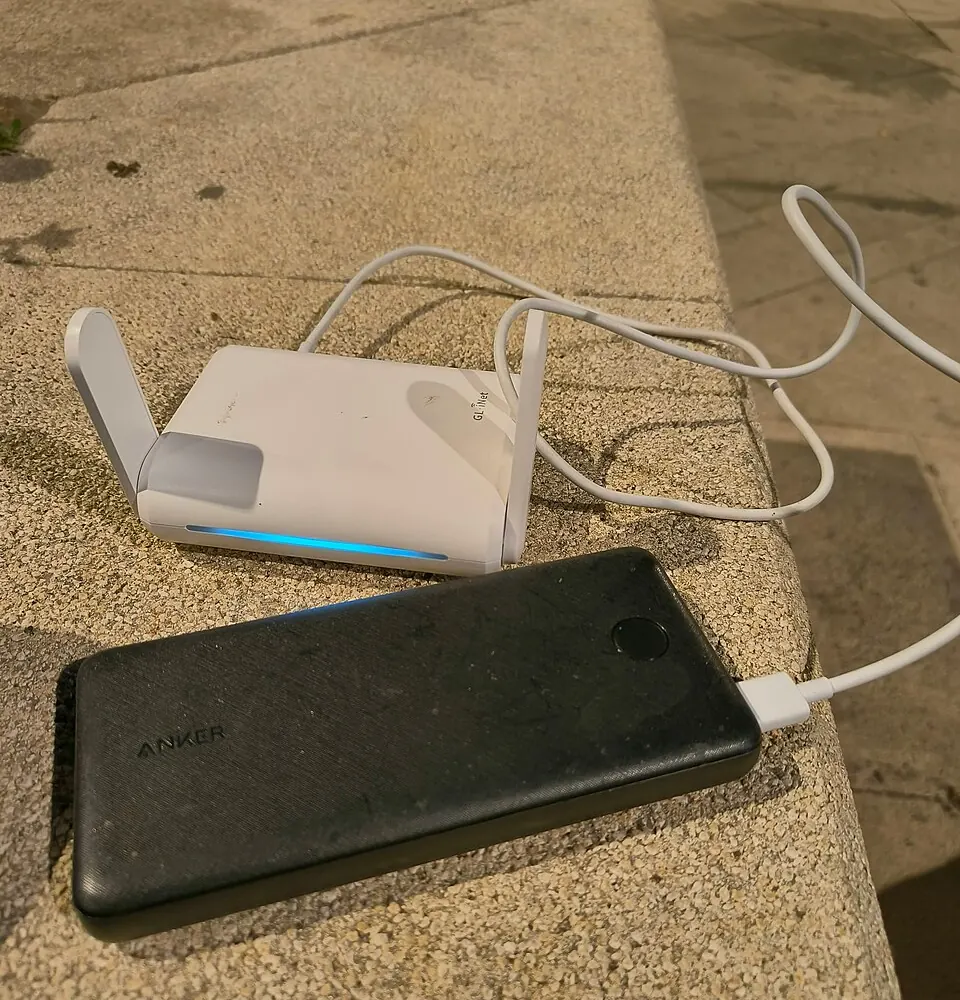
Best Travel Routers for Nomads
What actually improves a bad hotel or co-living Wi-Fi signal, and when a router is the wrong tool for the problem.
A travel router doesn't create bandwidth that isn't there — it can't fix a genuinely slow connection. What it does well is let you create your own private network on top of a shared one (hotel Wi-Fi, co-living Wi-Fi), which solves the security problem of a call or file transfer on an open network more than it solves a speed problem.
The other real use case is aggregating multiple connections — some travel routers let you combine a hotel Wi-Fi signal with a local SIM's data connection as a fallback, so a dropped one doesn't kill your call. This matters more for anyone doing regular video calls from inconsistent locations than for someone mostly doing async work.
Skip travel routers if your actual problem is dead-zone Wi-Fi with no signal at all rather than an unreliable one — no router fixes zero signal, and you're better off with a dedicated eSIM data plan as your primary connection in that case (see the eSIM comparison for options).
If you do get one, prioritize models with straightforward setup over ones with the most features — the router you can configure from your phone in five minutes at a new place beats the one with an impressive spec sheet you never learn to use properly on the road.
This is informational, not advice. Visa, tax, and immigration rules change, and a general guide can't account for your specific situation. Before you act on anything here, confirm current details with the relevant embassy, consulate, or a licensed immigration or tax professional. See our editorial policy for how we verify what we publish.